Archive for ‘History’

October 27, 2009

Attn. Justice Rajinder Sachar

by Sarvesh K Tiwari

“It is curious how markedly for evil is the influence which conversion to even the most impure form of Mahomedanism has upon the character of the Panjab villager; how invariably it fills him with false pride and conceit,… and renders him… less well-to-do than his Hindu neighbour…

When we move through a tract inhibited by Hindus and Musalmans belonging to the same tribe, descended from the same ancestor, and living under the same conditions, we can tell the religion of its owner by the greater idleness, poverty, and pretension, which marked the Musalman, it is difficult to suggest any explanation of the fact.

It can hardly be that the Musalman branch of the village enjoyed under the Mahomedan Emperors any such material advantage over their Hindu brethren as could develop habits of pride and extravagance which should survive generations of equality. And yet, whatever the reason, the existence of the difference is beyond a doubt…”

Census Report, 1881, Punjab, vol I, pp 103-4

October 13, 2009

mAna siMha the rAShTrakUTa II

by Sarvesh K Tiwari

Military strength of the kacHavAhA-s alone was formidable enough, but when others joined ranks against mAna, including the house of bIkAnera, the French-trained and led infantry of sindhiyA-s, the paid afghAn mercenaries, and the detractor fractions of rAThora-s, the build up simply made jodhapura army look like a marriage party. Faced with such an asymmetrical equation mAna suffered major losses and the jaipura confederacy rapidly ran over mAravADa and invested the very capital of jodhapura. The career of mAna seemed to be done with before it had even taken off.

But the asymmetry of forces arrayed against him was only to make his subsequent turn around in the conflict appear as miraculous as his recent ascent to the throne. When everything seemed to be going against him, in a surprise reversal of fate he turned the tables by luring afghAn mercenaries with promise of bribery (although once his object was met he would suspend the payments of promised installments, a characteristic of mAna to which we shall return). The afghans, whose loyalty was ever flexible to align with the highest bidder unless there was a jehAd, took an about turn and unleashed a series of devastating plunders in the domain of jaipur, allowing a forward force of mAna to dash directly to kacHavAhA capital, forcing the gates of jaipur to be shut down for the first time since the founding of the city. This compelled jagat siMha to abandon the siege of jodhpura and rush to secure his capital, only to find his returning army charged at from two sides by the jodhapura detachments, causing a total stalemate for him. On other fronts, through the diplomacy of his kAyastha and vaishya envoys, mAna successfully extracted the conduct of neutrality from bIkAnera and other houses, although his efforts of engaging holkars in neutralizing sindhiyA-s proved futile.

Pressed badly and the conflict proving more costly than estimated, jaipur abandoned kR^iShNa’s hand and desperately proposed to jodhpura a restoration of friendship, which was accepted and sealed through a reciprocal matrimonial alliance: mAna married a kaChavAhI princess and jagata siMha a rAThorian.

Besides his regular force, mAna had the support of an interesting band of militant sAdhU-s fighting under the command of a sanyAsI general named mahanta karmadAsa bhAratI. [Such bands of militant sAdhU-s of nAgA, nAtha and goswAmI varieties have a history going back several centuries, when they had picked up arms in reaction to the Islamist invaders, generally for shielding the tIrtha-s and maTha-s from any sudden eruptions of allAh-u-akbar, and for resisting the invader until the regular Hindu armies, generally of slower mobility than the AtAtAyins, could relieve them. There is an incident of such a band fighting against Akbar’s jehAd in rAjapUtAnA, there is also a less known incident of their liberating ayodhyA for a brief period during awrangzib’s time, and in all probabilities they seem to have also inspired the sikh bands under bandA bairAgI. lAmA tArAnAtha also mentions the unsuccessful attempts of raising similar sAdhU armies in north-east against the jehAd of bakhtiyAr khaljI. Thus the sannyAsins of eighteenth century who gave British an armed resistance in va~Nga, an event eternalized by ba~Nkima chandra through his AnandamaTha, had a long vintage. Captain James Tod, who had occasioned to witness first hand such sAdhU fighters during his visits to rAjapUtAnA, rightly applied to them the title of ‘Hindu Knights Templar’, and Jadunath Sarkar provides a more detailed account in a less circulated work of his dedicated to the history of the nAgA-s. Even to this date, their descendants still symbolically preserve some of the earlier military rigour in some forms. On the outskirts of where we lived in childhood, a nAgA-maTha used to be situated and we have vivid memories of the naked sAdhU-s working out at their mudgara-s].

In an extremely tragic consequence however, kR^iShNA, for whose hand the very confrontation had begun, committed suicide by drinking poison from her father’s hand, and became immortal in the bardic legends. Many accounts provide varying motivations for the tragedy, but in our view the most reasonable seems to be that victorious mAna now turned his attention to mevADa and along with the paid afghan mercenaries pressurized mevADa for the hand of kR^iShNA. Being already engaged to the defeated prince, her marrying mAna would have meant a disgrace for mevADa, but on the other hand since the rAjapUta to whom she was engaged had himself abandoned her hand, retaliation against mAna was also meaningless. Therefore as becoming of a descendant of pratApa, suicide would have appeared more agreeable to kR^iShNA.

Besides this tragedy, the entire episode legitimized mAna’s ascent, established his authority, and further consolidated his faith in the nAtha-s, for whom he established a great maTha and endowed a district he created called mahAmandira comprising several villages, which became a major center of the nAtha-s in west and flourished until British later dismantled its maTha.

mAna siMha, although now in control of his kingdom, is about to face a much more formidable adversity like most of his contemporaries, arising from the altered configurations of geopolitics across the Hindu Nation and the arrival of the Great Game. In the larger picture of the time, maharaTTA-s were now deeply entrenched in internal conflicts with each other, and it seems while they were able to see through the mechanizations of the mlechcHa, were unable to outwit them at it (true to the prophetic assessment of bhUShaNa who had noted a few decades earlier already that, ‘while Hindus remain unsurpassed in manliness and valour, the Europeans are superb at strategizing and trap-laying!’). The inter-maharaTTA rivalry and the British game in encircling them was about to reach its climax, although even now it was the maharaTTA force of dawlatrAva sindhiyA led by his well known French Generals Pierre Cuillier-Perron and Louis Berquin that was controlling the moghal seat in dillI as a maharaTTA puppet, just like mahAdajI sindhiyA had done before him with his own French General Benoît de Boigne. From Indore, the holkars were also growing powerful, now under yashavantarAv holkar, the grandson of legendary general of peshavA, malhArarAv, famous for leading the maharaTTA legions beyond sindhu to hoist the saffron banner in Attock. yashavantarAv also depended upon the French mercenaries in his leading military positions, the most famous of whom was Captain Dudernac.

As an aside, we wonder whether maharaTTA-s could have fared better under Hindu Generals leading the charge, rather than outsourcing the key leadership positions of military, especially of the infantry and artillery, to French. Besides the backlash or jealousy from the native Generals, there is evidence to suggest the frequent treacheries at the worst moment, desertions, and less than spirited fight back by the European mercenaries fighting on the native side. Or whether they could have done better had they at least kept their own Generals in the lead, like the policy mahArAjA raNajIta siMha was following at the same time with much greater success? [While raNajIta siMha had employed Italian Generals like Jean-Baptiste Ventura and Paolo Di Avitabile, French Generals like Claude August Court, and even an American veteran of Russian army Alexander Campbell Gardner, he made it a point to remain suspicious of foreigners and keep them under close control, either directly under his own command on field, or sandwiched between the native senior Generals like hari siMha nAlvA or jassA siMha AhlUvAliyA.]

But coming back to mAna siMha and it is interesting to view these events from the vantage of his position. British had offered a very favorable treaty to the house of jodhapura before mAna had ascended the throne, under the larger policy of keeping the sikha-s, jATa-s, and rAjapUta-s neutral while they liquidated the maharaTTA-s in North India. Their negotiations were on with bhIma siMha rAThora before his premature death. But once mAna took the reign, he outright rejected the British proposal, refused to ratify the treaty which was already ratified by the East India Company and instead sent to them at dillI a draft of his own, with those conditions next to nullified which were the very objects of the British. Governor General Wellesley refused to sign the new treaty, and this was the end of their negotiations with jodhapura. It would seem a bit strange since by this time many others in rAjapUtAnA had already signed some sort of a treaty with British or the other, and rAThora-s being relatively weak would have looked up to some alliance.

But even before he had come to the throne of jodhapura, he was very friendly with yashavantarAv holkar, and had given him support during the latter’s intra-maharaTTA struggles, particularly after holkar had emerged as the potential rallying point in North India having defeated the joint forces of sindhiyA and peshavA on the dIpAvalI eve of 1802.

Once the Anglo-holkar conflicts broke out, mAna took open sides with yashavantarAva, frustrating the English policy of keeping rAjapUta-s neutral. During the 1804 siege of bharatapura, in which jATa-s and Holkars were able to humble the force of famed Lord Lake for a sustained period, not only had mAna sent a horse detachment to assist holkars, but had also brought the holkar family to the safety of his own city where they remained for a whole year despite all the diplomatic pressures the British resident in dillI applied on mAna to hand them over. No wonder, later on during his own contest against jaipur, he had expected his friend from Indore to come to his assistance, although that did not happen.

mAna was probably also inspired by the gorakhAlI-s of kAThamANDU, who were still successful in repulsing the British, and in fact the initial trial ventures by the British towards nepAla were met with such fierce retaliation that the mlechcHa-s were left quite intimidated and tamed. mAna, a spiritual brother of the shAha-s, bound with them in the nAtha brotherhood, probably underestimated the British at the moment.

However within the next decade the entire landscape changed with British gaining all their objectives on almost all the fronts, and the Hindus losing theirs one step by one. By 1805 itself, British had decisively defeated both the holkar and sindhiyA, thrusting on them very restrictive treaties, especially forcing them to cede most of the territories they had acquired beyond their base – holkar all territory to the north of ga~NgA, and sindhiyA all of his to the west of chambal, in south peshavA was already reduced to a puppet, although one more war in the next decade will ultimately seal the fate of the maharaTTA power. Besides, Europe being completely secure with the decisive elimination of Napoleon Bonaparte, angrez were now able to focus on delivering the sucker punch in the Indian colony, concentrating all their resources, technology, and man power to this theater.

Keeping the superb strategy and technology aside, we think British surely had a clear upper hand simply from the point of the quality of their battle-hardened military leadership, with such men leading their companies as Maj. General Charles Cornwallis, who had resisted George Washington in battles of New York, Princeton, Philadelphia and Virginia, before now coming to India to redeem his repute; Arthur Wellesley, whose war-resume boasted of extremely diverse experience across the continents ranging from the Flanders Wars along side the Austrians against the French, the naval war against Spanish in Philippines, action in Iberian peninsula, and finally the Waterloo campaign that ended the career of Napoleon, besides being a superb politician – he retired as the PM of UK; Thomas Hislop who had seen action on the British side during the American as well as French Revolutionary Wars, had commanded naval operations against Dutch in West Indies, had successfully led the Siege of Gibraltar defeating joint armies of Spaniards and French, now leading British action against the maharaTTA-s; General Gerard Lake, veteran of American, French and Irish wars; General David Ochterlony, an American colonial product born in Boston and veteran of a variety of battles in America and Europe before arriving in India (famous for his harem in dillI of over a dozen women). We must also say that the Europeans had also gained a very diverse exposure in different theatres even within India, from va~Nga to karNATa and nepAla to maharaTTA country, and the resulting cross-pollination of experience was a huge advantage to them which Hindus lacked at this stage of conflict to a large extent, with the old generation of the Great maharaTTA Generals gone, who had once scaled the whole map of Hindu Nation. Besides, the British Plan already had the solid backing of a very thorough study of India by now and evaluation of its people. Consider this: Captain James Tod had already surveyed the history and geography of the entire rAjapUta country with every single one of its clan – even though they were politically still independent – and had already produced in the first two decade his celebrated ‘Annals and Antiquities of rAjapUtAnA’, not to mention that the European Indology as a discipline was already flourishing with its second generation with the likes of Colebrooke and Schlegel now in chairs, William Jones dead just a couple of years back. In contrast, we seriously doubt if there was even one Hindu at the time who properly knew the basic history and geography of Britain! We must keep these views in mind when evaluating how the native states fared against such a well informed adversary with such a great military exposure, not to mention their technology and strategy for the Great Game.

But what did it mean for mAravADa, and mAna siMha its last independent king? In one single decade all his hopes of independence were dashed and he had come to realize that it was no use openly confronting the British. Those he looked upto, the holkar of indore and shAha of nepAla, had given up, and he himself was now facing renewed internal threats to his throne.

Continued

Tags:
September 14, 2009

mAna siMha the rAShTrakUTa

by Sarvesh K Tiwari

While mAna siMha is no hero, nor is he pretending to be, his character still represents the collective contemporary Hindu psyche, with all their aspirations and consciousness as well as weaknesses and helplessness, of that sAndhya period when on one hand the Moon of the Hindu Resurgence was on the rise, and on the other the grahaNa wrought upon it by the mlechcHa-ketu was also imminent, an eclipse from which the Hindu fate never seems to have fully recovered.

In the tumultuous struggle of centuries fought by the mahArANA-s of mewADa, from saMgrAma siMha to pratApa siMha, against the hordes upon hordes of Islamites, none had joined them for longer, and watered the desert battlefields with their blood more plentifully, than the ‘hara-hara-mahAdeva’ shouting fierce hADA-s of koTA-bUndI and the rAThora-s of mArawADa, the western extraction of the legendary rAShTrakUTa-s from South.

Since the days when their contingents had fought under the Generalissimo of bhojadeva the pramAra in annihilating the Moslem barbaranins from ghazanA, to the era when they had sent their princes and generals to serve under the columns of mahArANA sAMgA against bAbUr, where they valiantly dyed kAlindI with their blood on the fateful day in biyAnA, to the era when they preferred to get slain in the samara rather than yield to the suzerainty of the moghul tyrant Akbar, to the time when now although yoked under the overlordship of shAhajahAn they perpetually remained in rebellion until gaining a virtual independence: their blood appears to have never seemed too costly a merchandise to them, for the honour of their five-coloured pacharaMgA mast. (There is only one aberration in the long valiant tradition, a comparativelysmall black spot in their history which they recall as an eternal disgrace and curse upon themselves)

Then later, emerging from the dark pall of the moghal sway, it was theirs that was the first rAjapUta sword, represented in legendary General durgA dAsa rAThora, the first amongst all the rAjapUta-s of his time, that rose to strike down at the writ of awrangzib and reclaim a complete swarAja for mArawADa, as was being done at the same time in their ancestral country in South by the son of cHatrapati, to whom he had personally met to hand over the custody of the rebellious son of awrangzib, and giving a taste of his own medicine to the Islami maniac, had kept a Moghal princess, a grand-daughter of awrangzib, in a respectful detention in mAravADa until awrangzib himself begged for the demand of whatever ransom and terms of release. Their connection to cHatrapati goes further back to those days when it was through the intelligence sharing and guidance of the Lord of maru-s, jasawanta siMha rAThora, still counted in the first row of all time great rAjapUta warriors, who had secretly sought a meeting with shivAjI on the dense outskirts of pUnA and not only guided him about the designs which awrangzib had laid for the Rising Sun of hinduvAnA, to use the term bhUShaNa uses, but also tacitly helped him get the better of shAistA khAn by silently withdrawing the rAjapUta-s troops from the fort on the night of the operation. (Incidentally, both shivAjI and jasawanta siMha shared a lot in common: the similarity of the cunning they had independently employed in their early careers; both of their sons were sent to torturous death by awrangzib; even the year when both of them breathed their last is the same, but this interesting subject we shall broach on some other occasion.)

In short, of rAThora-s is a saga of those qualities of valour, cunning and loyalty to motherland, which every rAjapUtAnI of marriageable age seeks to find in her future husband, and when married, prays to bhavAnI for the fruit of her womb to be endowed with.

Such is the valiant clan whose leader the subject of these lines became at a time when the Hindu History was staring at a major crossroad. The epoch of the time of his birth was such that the maharaTTA power was still holding considerable sway generally from coast to coast in dakShiNa and while much mismanaged and neither as united nor spirited as they used to be under the early peshavA-s, their writ was still running in the Gangetic plains from dillI to va~Nga. A flowering Hindu kingdom erected a little earlier in the himAlaya by the blessed pR^ithvI nArAyaNa shAha was already flourishing in nepAla. In North-West, the followers of gobinda siMha had effectively subjugated the Islamites to create a powerful kingdom that sprawled from the plains of pa~nchanada to as far west as knocking gAndhAra and as far North as enveloping the entire kashmIra; the fierce and rustic jATa-s had all but completely ejected afghAn savages from the central northern regions; and the remaining centers of Moslem power were now limited to being pale patches upon the map of Hindu Nation. The year was 1804 when the destiny of young mAna siMha saw him take the mettle of jodhapura, which he attributed to the blessings of his guru, a miraculous nAtha yogI.

His ascension, like his many counterparts of contemporary landscape was not smooth, indeed it happened against all odds. We shall do injustice to the colourfulness of events if we omit some of those interesting backgrounds.

His grandfather, rAjA vijaya siMha rAThora, had several wives and children and grand children, and although well past the prime of his youth he fell in amour with a beautiful damsel from a rich oswAla family of his capital. The whole matter caused much scandal across mAravADa, but the antidote of the prospect of losing repute was not strong enough to subdue the affliction caused by the arrows of rati’s husband! Marriage, although vijaya siMha desired so, was disallowed to him by his priests and nobles, so the elderly rAThora simply took the lady of his infatuation as a concubine. Soon it seems his heart sank in the passion for this rUpasI from one depth to the other and infatuation turned to devotion. The young object of his dote, on the other hand, was not so selfless and demanded equal rights as his other wives, and treated the old king with no dignity; on one occasion she is reported to have thrown her sandals at him. The royal lover, ripe in body but teenager at heart, finally decided to install upon her all the legal rights that his other legally wedded rAjapUtAnI queens had, including giving her a real heir of his own vIrya. To this effect, and biologically being too old to put a child in her lap, he decided to adopt a young grandson of his own, with the lady of his love as the adopting mother, and declared the child, this grandson turned son, our mAna siMha, the yuvarAjan.

This way, while mAna siMha legally superseded his several uncles and biological father, who incensed at being deprived of their birth rights and supported by the nobles disgusted by the behaviour of their king, plotted and eventually dethroned the old king and had the lady murdered. A wily uncle of his, bhIma siMha took the throne, followed by a bloody liquidation of all other competitors except one, the young mAna siMha, who survived because he was at the time away in the fort of Jhalore, which was not in the immediate reach of the arms of jodhapura, and although the assassin bhIma siMha later laid many sieges to Jhalore, he did not succeed in liquidating mAna.

Growing up in seclusion, away from his country and without care of any parents, mAna siMha once chanced upon meeting a nAtha siddha while wandering in the araNya, and the rest of the story is in the template of what we have heard on many instances, now in relation to bappA rAvala and now in the rise of pR^ithvI nArAyaNa of nepAla. Although having no hopes for future, living a life of deprivation, and being captured and executed appearing a matter of time, his fate took a surprise turn, which he attributed to the blessings of the yogI, when suddenly in mid of a siege usurper-assassin bhIma siMha died without any apparent cause, allowing mAna siMha to swiftly claim, with a small band of his armed followers, his legal right to the throne founded by his illustrious ancestor jodhA siMha rAThora.

When he assumed office, he was faced with two challenges: one, the sindhiyA-s of Gwalior refused to recognize the sovereignty of mAravADa and threatened a war. Second, some of the nobles loyal to bhIma siMha pretended that a wife of bhIma siMha was pregnant at the time of his death, and the posthumous child born in secrecy was the legal heir to throne, not mAna.

But it was another event which might seem trivial and unnecessary to an uninitiated but will be immediately understood and felt, by those familiar with the rAjapUta psyche, which caused a long-drawn war and resulted in much bloodletting for which rAjapUta-s were always ready.

As we know, mewADa is the most sacred seat of rAjapUta pride, indeed the pride of India. Up until the late times, no Hindu king at least of North India would be legitimized until he receives the approval of this house. It was no wonder that shivAjI always aspired to declare his lineage to be from this house, and the brAhmaNa-s of kAshI were presented written letter of approval from the then rANA before shivAjI’s rAjyAbhiSheka would be performed. Even Sardar Patel had first approached mewADa before any other state for the accession to the Republic of India, and the signature of the rANA of mewADa was the first on the instrument, before any other, and likewise after the Consitution was accepted, the first President of India Dr. Rajendra Prasad rode on the first republic day from Rashtrapati Bhavan to Red Fort on the royal elephant sent by the rANA, as a symbolic gesture of mewADa’s goodwill towards the democracy.

So, even if physically weakened at times, the house of bappA rAvala had always reserved the universal claim on being the first of all the rAjapUta clans. Marrying one’s daughter into the mewADa house, in bloodline of the rANA-s, was and is a matter of much prestige for any rAjapUta clan, what to say of receiving the hand of a sisodiyA daughter in matrimony!

A certain princess of mewADa named kR^iShNA kumArI was the daughter of bhIma siMha, the then rANA, and she was reputed as much for the qualities becoming of a good rAjapUtAnI as for her looks. Before his death, bhIma siMha of jodhapura had approached the eponymous rANA with matrimonial proposal for himself with this princess. This was natural as the rAThora-s were always considered more preferable matrimonial allies by the house of mewADa, examples of which include such names as mIrAbAI, a rAThora princess by birth and sisodiyan queen by marriage, or the mother of jasawanta siMha rAThore, a mewADian chief princess. But before rANA could have responded, the matter simply ended with the untimely death of bhIma siMha rAThore, and allowed another prince, jagata siMha kacHavAhA, the prince of jaipur, to approach rANA for the fair hand of kR^iShNA.

The marriage was very important for the house of ambar, who with all their fat purse gained from the centuries of alliance with moghals, were suffering due to the same cause, from a low prestige. They were considered next to an outcast by the other 36 clans of rAjapUta-s, since that day when mahArANA had refused to see the face of and dine with the kacHavAhA prince and envoy of turuShka because not only had the house of ambar accepted the suzerainty of the Moslem but also given them their daughter in marriage. But now, with the changed landscape, the glory of jaipur can be instantly restored in the eyes of other houses, if the present rANA would agree to the matrimonial alliance, that too of the famed princess kR^iShNA.

But this was not acceptable to rAThora pride. With young mAna on the cushion of jodhapura being available to replace bhIma siMha in the previous proposal, rANA’s even considering to give the coveted hand of the sisodiyA princess to the lowly kacHavAhA-s was not any less than a sacrilege!

It should be noted here that lately the rAThora face was not altogether clean of the same blot too, and they had on more than one occasion married their daughters with moghals; indeed jodhAbAI was a rAThorian, and even the last recorded marriage of any rAjapUtAnI to a moghal, was also of a rAThorian princess, the daughter of ajita siMha rAThora. It is possible that it was from the same motivation as that of the kacHavAhA-s that the hand of kR^iShNa became such a matter of prestige for rAThora-s too.

They declared a war upon jaipur and its allies.

Continues to second part: https://bharatendu.com/2009/10/13/mana-simha-the-rashtrakuta-ii/
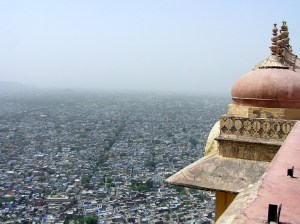
jodhapura

Tags: ,
August 30, 2009

modI script and mAravADI accounting

by Sarvesh K Tiwari

During our short sojourn to vraja this janmAShTamI last weekend, our companion was a retired and elderly mAravADI businessman from utkala country, from whom we got to learn about many subjects, besides being fed the delights of the mAravADI kitchen of his hosts, option of pardoning ourselves from which was denied.

Our companion was at one point nostalgically relating the things of gone-by yesteryears, and was narrating the reminiscences of those days when he was a boy being initiated in his father’s business (of metals and minerals).

One of those things that he said he still missed sorely, was the tradition of book keeping in modI script.  While submitting that none competes with devanAgarI in perfectness, completeness and aesthetics of writing, he demonstrated how modI was an improvised shorthand that afforded more advantages for an accountant than nAgarI character set.  It allowed dual benefits: a quicker entry of journals, and an inbuilt encoder.

First, the script was designed in a way that it did not demand lifting of the pen from the ledger book, except for dipping it in the ink pot, which in itself was a huge advantage for the accountants who had to process a large amount of transactions during an average day.

This was done by making the standard nAgarI characters cursive where possible, and replacing those characters altogether which either had ‘corners’ demanding deceleration of the nib, or had features which demanded either the lifting of the pen, or repeating a line over itself, such as ‘ष’.

Anyways, the modI script then did away with the necessity of the horizontal bar, that integral datum of nAgarI which otherwise wonderfully enforces a clear and aesthetic alignment of the character-string, but which required the pen to move back and forth, slowing down an accounting clerk!

Finally, the most important deviation: the mAravADI shorthand eliminated all the mAtrA-s from the table, meaning that, for example, all the members of ka-kA–ki-kI-ku-kU etc group were only written as ‘ka’. In this aspect, mAravADI shorthand deviated even from the southern modI tradition of maharaTTI-s since they still keep the mAtrA-s.

This elimination of mAtrA-s while complicated the matter for a layman, for a trained accountant it not only accelerated journal writing, but also afforded a wonderful system of encoding information.  Only someone who knew the context of a particular transaction and was familiar with the agreed parlance and terminology of that business, would be able to understand the content of that journal entry, and with a little practice it was a wonderful way of encoding financial data!

modi-1

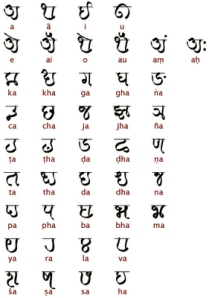
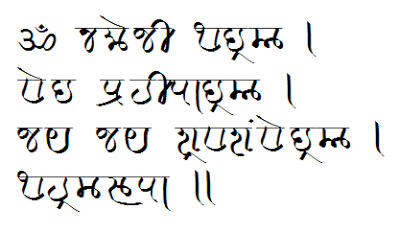
(above is the maharaTTI variety of modI, not mAravADI. Thanks to this blog )

To demonstrate his point he narrated a funny anecdote from those days when he was then undergoing apprenticeship under the dIvAna of a branch of his father’s business. The days were when the hindU nation had moved on from the tyranny of the mlechcHa to the tyranny of the native socialists, and the corruption was already rampant.  Long story short, once this dIvAna had to affect a payment of some trivial sum for chai-pAnI to the income tax officials, simply to avoid the wastage of time in full scan audit.  The payment was also carefully entered in the general ledger, and the entry was made with journal description reading as “i-na-ka-ma-Ta-ka-sa-va-la-ka-da-la-va-ya”.  With intended mAtrA-s added, this meant “income tax vAlo ko dilavAyA” (‘made a payment to income tax fellows’).  But it seems income tax department did still have the books to be submitted for an audit, and as the fate would have it, the auditors asked dIvAnajI to explain this entry.

At this point our fellow traveler burst into a round of laughter before he managed to complete the narrative.

dIvAnajI did not lose much time in employing to his advantage the intuitive flexibility of modI script and interpreted the journal description as follows. “inakI mA (ne) Taxi vAlo ko dilavAyA”, meaning “His mom (referring to our companion’s mother) had us make payments for Taxi services”.

Then with twinkles in his eyes, he said that now in the days of digitized accounting, when all business was running on ERPs, he was manually passing the first journal of the new open ledger every year only in modI script on the day of lakShamIpUjana, to keep intact the memory of the tradition.

He then narrated another funny anecdote of days when his father had instructed his accountants to get trained in English language, and the initial outcome was no less funny.  He was once sent to Mumbai by his father for some business, for the first time alone on such a journey.  As was done those days, upon reaching there he sent a telegram for back home in churU, in imperfect English: “Reached Bombay stop staying with safely stop”, of course a literal translation from the common hindI phrase of its meaning.  Upon receiving the telegram, dIvAnajI promptly informed his father that kuMvara sahib had reached Bombay. But alarmed by the last half of the telegram, he quickly added his concern that it was probably time they looked for matrimonial alliance for the young fellow, since it seemed he now took interest in female company and had taken with him some lass with a fashionable name like ‘shephAlI’, likely an Anglo-Indian rUpajIvI!

Another hilarious outburst of laughter.

August 11, 2009

Jaina footprints on kannaDa; motivation for jaina vernacular scholarship

by Sarvesh K Tiwari

It is a fact that chandragupta the mauryan, the most genius military leader recorded by the Indian History, had conquered all of dakShiNApatha including whole of karNATaka, the testimony of which is furnished by the bilingual saMskR^ita-prAkR^ita mauryan inscriptions from the region. This is also of considerable credence that he had, along with a large population from his capital, of which jaina-s were a part, taken a lengthy retreat in this province at some point in time, faced with a prolonged draught in North.  It is by this means that the region seems to have come in close contact with jaina-s, if not introduced altogether for the first time to the jinadharma.

By this time, the language of kannaDa, along with its numerous dialects, must have already emerged with a distinct identity, from the household of the draviDan grand-aunt, although we know little of her older forms except for through the much later inscriptions. (Still the data is much clearer in this case than we get to see about the past of the most North Indian vernaculars).

In later centuries, many kannaDa works were produced including its grammar, especially during the ga~NgA period, although except for the names and themes of some of these early works, the manuscripts themselves have not been found.

This is where, to our rescue, enter the jaina-s, and it is interesting to note that the oldest work of kannaDa available so far to us, comes from nobody but a jaina scholar.

Many sources mention the 10th century pampA as the oldest kannaDa poet, the Adikavi, and his translation of the great bhArata, titled samastabhArata, as the oldest kannaDa poetry, besides AdipurANa the kannaDa narrative about the founder of jina-mata.   However pampA’s being first in the field of kannaDa will only be accurate so far as we speak of mahAkAvya.

One full century before the times of pampA, was written kavirAjamArga, which in reality is the oldest extant work in kannaDa that is available. kavirAjamArga, a handbook of poetics, was a contribution of another jaina scholar, under patronage of king nR^ipatu~Nga. Impressed by the stalwarts of saMskR^ita poetics, daNDI and bhAmaha, it lays down, using as a template the famed kAvyadarsha of the former, all the fine points about producing poetry in kannaDa vernacular.   (Interestingly, while paying tributes to saMskR^ita giants, it forbids the aspiring kannaDa poets from mixing the words of saMskR^ita and kannaDa, warning them that it would be akin to ‘mixing buttermilk with boiling milk’!)

Even before this time, we read that another jaina scholar tumbulUrAchArya wrote in the 7th century, a kannaDa work named chUDAmaNi, while during the same period prAbhR^ita was produced by another jaina scholar by name shyAmakuNDAchArya. Unfortunately neither of these works is available.

Produced a little later but still of quite antiquity is yet another old kannaDa work of jaina origin, vaDDArAdhane, which is a collection of nineteen jaina tales, quite of the nature of what we find produced at the same time in prAkR^ita and apabhaMsha from the jaina pens in the north, like entertaining kuvalayamAlA. ‘vaDDA’ in the title of this work even comes from apabhraMsha, and quite corresponds with its modern daughter, Hindi, in ‘baDA’, meaning ‘big’ / ‘elder’.

So, jaina contribution to kannaDa is in line with their contribution to many vernacular languages of many parts of India, be it gujerAtI, maharaTTI or maithilI. They were very particular about not only mastering the vernaculars but standardizing their literature, codifying the grammars, producing dictionaries, and preparing the manuals of poetics. Indeed most of the prAkR^ita and apabhraMsha grammars and dictionaries come to us intact, written by jaina AchArya-s and carefully preserved in jaina bhANDAra-s.

Having acknowledged jaina contribution to Indic languages, we were curious about what could have motivated them to go out of the way and master so many vernaculars beyond prAkR^ita and apabhraMsha, their chosen languages of knowledge.

We got the answer, internally from within the jaina literature, that too, no less than from the celebrated jaina master AchArya kunda kunda the ShreShTha.

In his great treatise of philosophy, samayasAra, which is held in a comparable esteem by jainAvalambins, as the bhagavad-gItA is by the Astika-s, AchArya kunda kunda hands us this lead in chaste prAkR^ita: “jaha Navi sakkamaDajjo aNajjabhAbhAsaM viNA u gAheduM… (samayasAra 1.8)” It’s saMskR^ita rendering would be “yathA na shakyatonAryyo anAryabhAShA vina tu grAhayitum…”, meaning, ‘(like) anArya-s can not be taught unless non-AryabhAShA-s are employed…’.

Which quite explains what might have motivated jaina scholarship in mastering different vernaculars: they were, unlike Astika-s, quite active in propagation of their mata, and mastering the vernaculars was a natural and essential pre-requisite for it.

Just one last comment about valluvar being claimed as jaina. Anyone with familiarity to both kuraL and jaina texts, wouldn’t claim this, besides we have yet to come across any jaina treatise of note that ever remembers valluvar as jaina, and jaina chroniclers are extremely particular about mentioning their masters. When some jaina hagiographies go so far as to claim kuTilya and rAmachandra as jaina-s, why would they leave out valluvar is hard to explain.

July 16, 2009

5th century nR^isiMha

by Sarvesh K Tiwari

nR^isiMha_jhAMsI

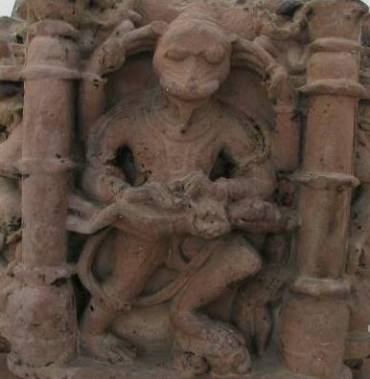
This 5th century sculpture from the outskirts of Jhansi town is probably the oldest intact nR^isiMha image in North India, with some possible exceptions of even older ones in central nepAla.

Tags:
Design a site like this with WordPress.com
Get started